
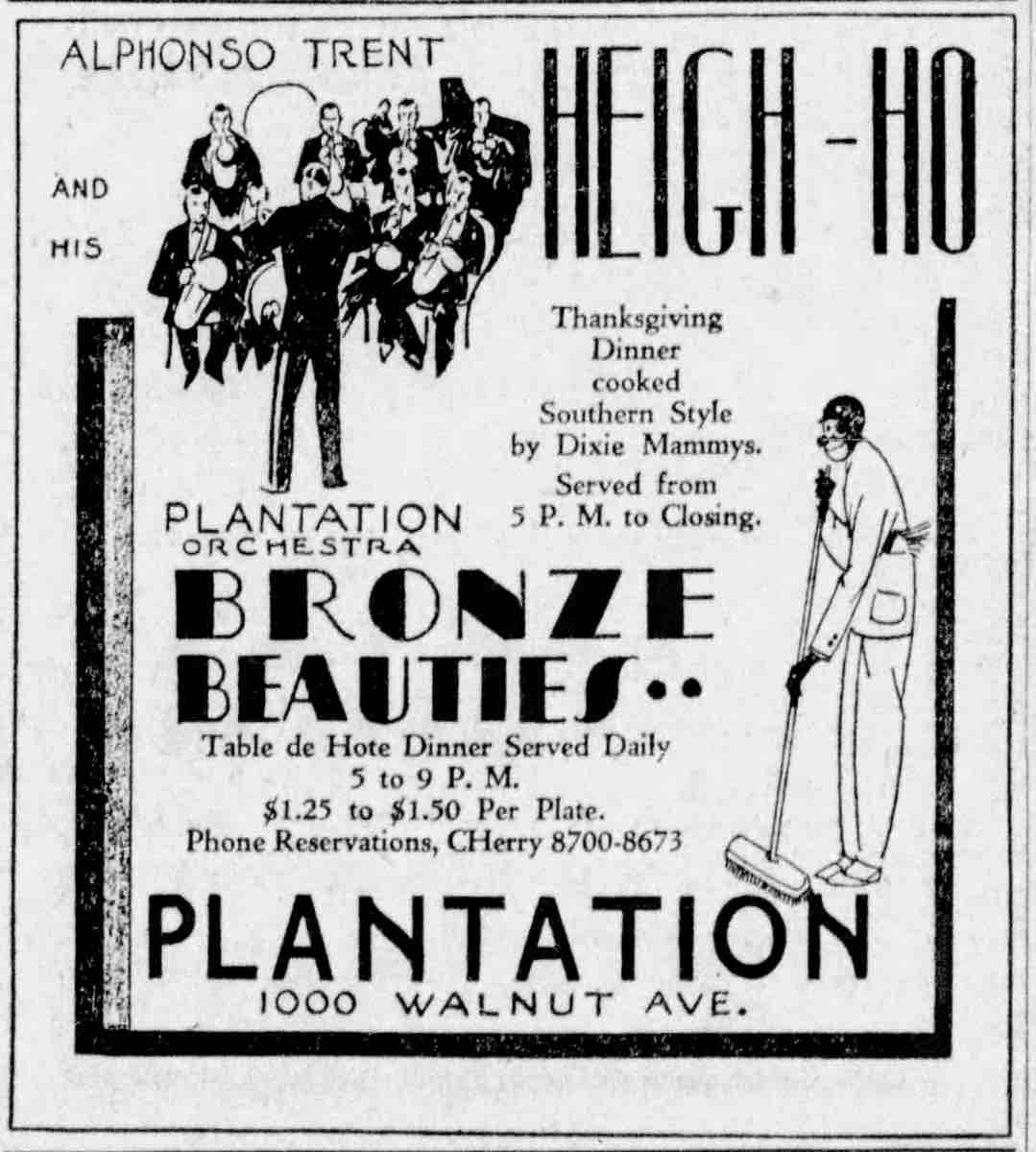
C. I. O. Hall (often referred to as C. I. O. Temple) was located downtown at 1000 Walnut Avenue. Built in 1912 for the Order of Moose fraternal organization as Moose Hall or Moose Temple, the four-story venue became home to a dine-and-dance establishment, Harold Le Foe’s Plantation, in 1929. The Plantation featured Harlem-style acts, “southern cooking,” and a Black waitstaff and was marketed to white patrons with ads that included racist stereotypes. The club opened with a show titled “Bronze Beauties,” performed by New York–based Alphonso Trent and his band. Soon thereafter, it faced picketing by the local cooks and waiters union for its hiring of non-union workers. A month later, in January 1930, a mysterious fire caused significant damage to Le Foe’s nightspot, which seems to have closed as a result. The fire destroyed Trent’s orchestra’s instruments and led Trent to return to his native Fort Smith, Arkansas.
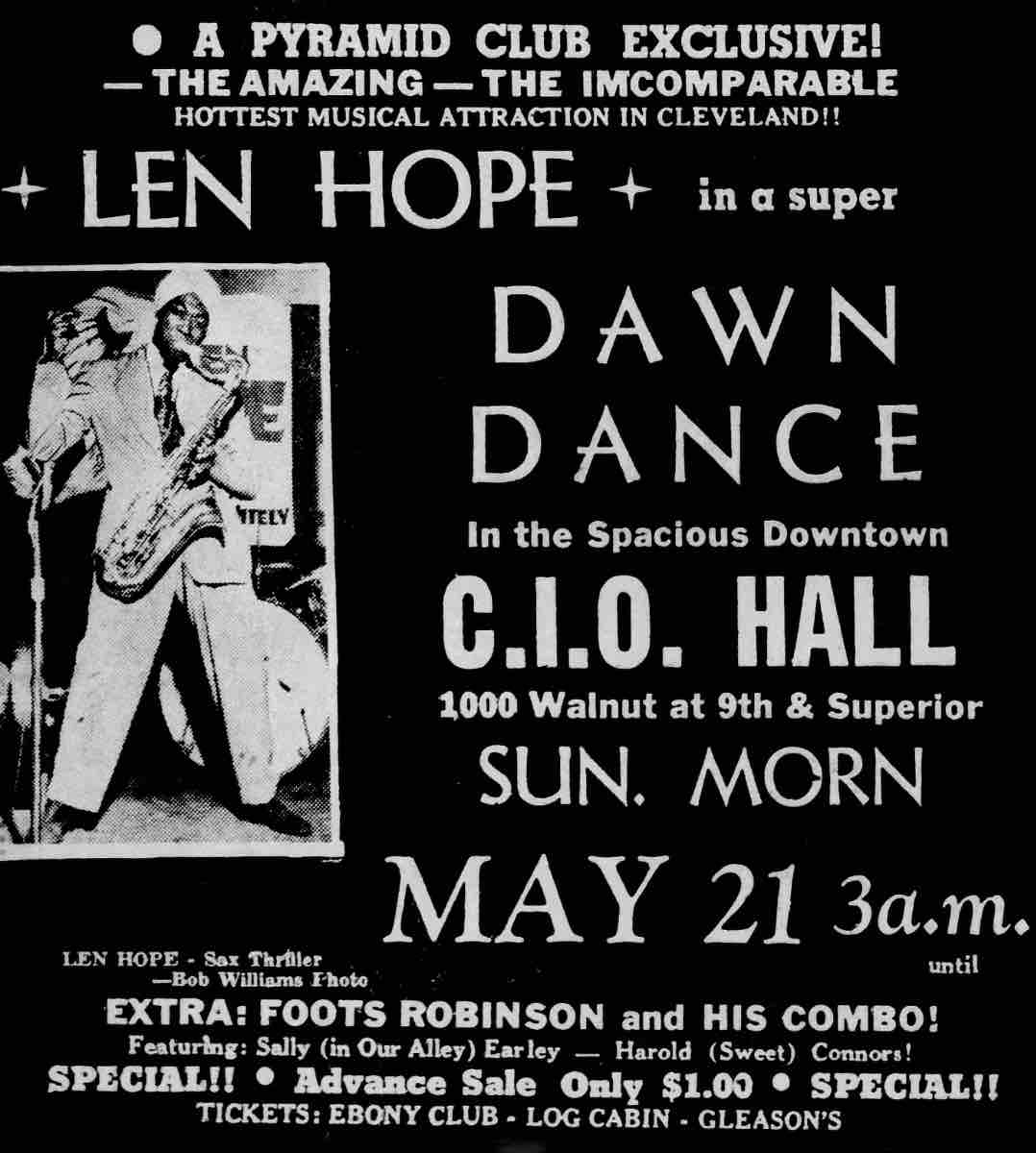
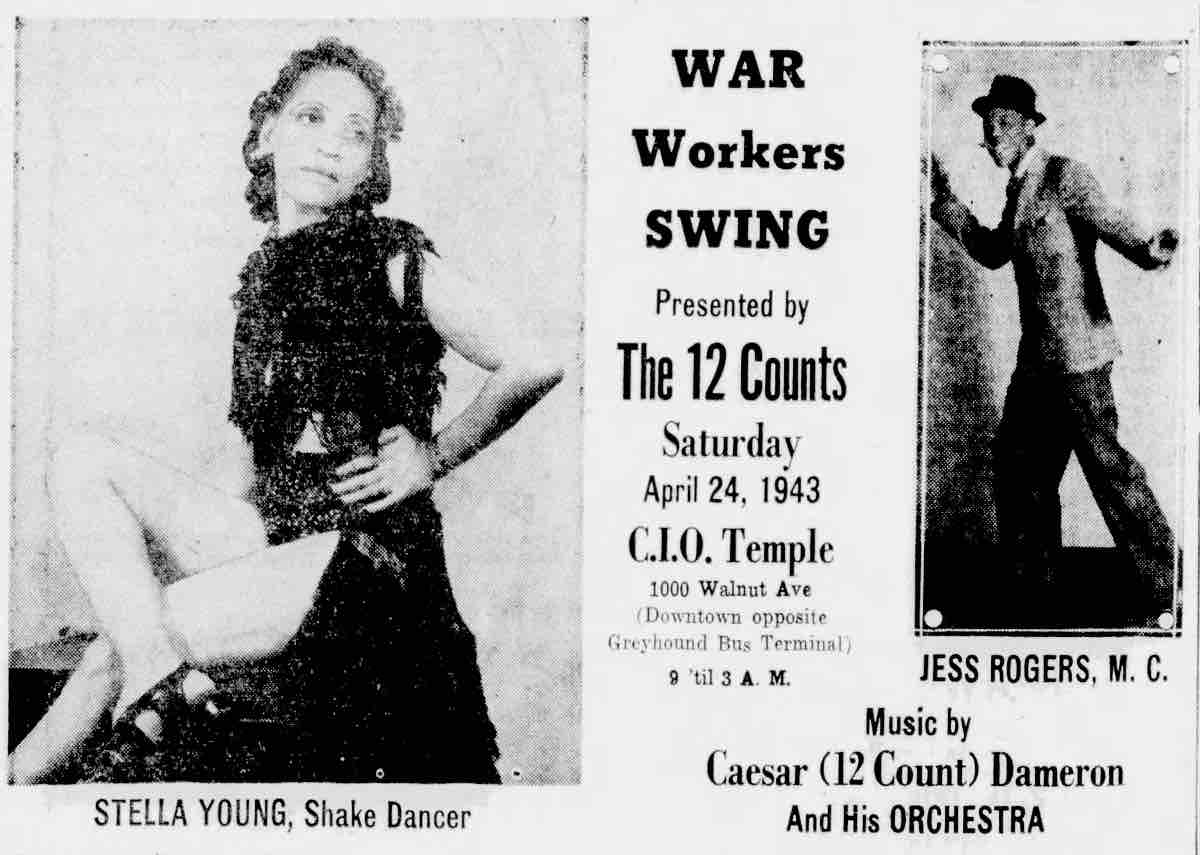
In 1934, the building had become known as the Metal Trades Temple, a venue used for Metal Trades Council meetings and other labor-related activities. It later became headquarters of the Cleveland Industrial Union Council (CIUC), the local affiliate of the Congress of Industrial Organizations (CIO), which sought to organize industrial workers. Unlike older craft unions, which often excluded Black workers, CIO unions generally sought to organize workers across racial lines. As C.I.O. Hall, the former Moose Temple flipped the script from its earlier, short-lived stint as an Old South fantasyland. Beginning in 1943, the hall regularly advertised Black musical acts, dances, and other entertainment in the Call & Post. Although the extent to which the CIO’s approach to interracial unionism shaped the hall’s entertainment policies is not clear, the building became an important gathering place for Cleveland’s Black community.
In June 1944, a disturbance involving theft, vandalism, and threats of physical harm occurred during an unspecified event at the hall, leading the union operators of the facility to declare an end to future entertainment there for fear of a “race riot.” It is not clear how long this policy continued, but by 1946 the hall again appeared regularly as a venue that welcomed Black patrons, including a United Negro & Allied Veterans of America–sponsored “Victory Dance” with Caeser Dameron & Orchestra in October. C. I. O. Hall continued to host Black organizations, such as the Alpha Phi Alpha fraternity’s Mardi Gras ball in 1955 and regular concerts with dancing, including a B. B. King concert in 1957. In 1958, three years after the national AFL–CIO merger, the Cleveland Federation of Labor and CIUC consolidated. The merger likely explains why the union sold the forty-six-year-old hall, which was demolished to create more parking for Union Commerce Bank.
Resources
- Advertisement for C. I. O. Temple. Call & Post. April 24, 1943.
- Advertisement for C. I. O. Hall. Call & Post. March 25, 1944.
- Advertisement for C. I. O. Hall. Call & Post. October 19, 1946.
- Advertisement for C. I. O. Hall. Call & Post. January 15, 1949.
- Advertisement for C. I. O. Hall. Call & Post. April 27, 1957
- Advertisement for Plantation. Cleveland Plain Dealer. November 28, 1929.
- Advertisement for Plantation. Cleveland Plain Dealer. December 15, 1929.
- Advertisement for Plantation. Cleveland Press. November 26, 1929.
- “B. B. King Will Ride at C. I. O. Hall Sunday Night.” Call & Post. May 26, 1957.
- “Cleveland Industrial Union Council.” Encyclopedia of Cleveland History.
- “Cleveland’s Newest Cafe, the Plantation, Will Open Wednesday.” Cleveland Plain Dealer. November 24, 1929.
- “College Alphas Stage Colorful Mardi Gras Ball.” Call & Post. January 29, 1955.
- “Fire Hits Night Club.” Cleveland Press. January 13, 1930.
- “New Club Incorporates.” Cleveland Plain Dealer. November 30, 1929.
- “Picket Night Club.” Cleveland Press. December 5, 1929.
- “Plans Family Nights.” Cleveland Plain Dealer. March 7, 1934.
- Rinne, Henry Q. “Alphonso E. ‘Phonnie’ Trent (1902–1959.” Encyclopedia of Arkansas.
- Young, Billy. “Vandalism Causes CIO to Cancel All Hall Contracts.” Call & Post. June 10, 1944.