
It’s 1934, an era filled with a love of music and dancing. Down in Cleveland, Ohio, a woman by the name of Martha Bradley has a vision—one of creating a place of joy and togetherness—and she becomes the person associated with what soon becomes known as the Circle Ballroom, a popular venue for music, dancing, and fun. The space Bradley operated already had a long history of social dancing. Before becoming the Circle Ballroom, the upstairs hall at 10300 Euclid Avenue had several other identities: Tiffany Dance Academy, Arcadia Dancing Academy, and then Zimmerman’s under the management of Gus Zimmerman. In 1932, it even operated briefly as the Crystal Roller Skating Gardens. By 1934, advertisements began calling it Bradlee’s Circle Ballroom, marking the start of its new chapter. Located right above the Circle Theater, the Ballroom quickly became a space focused on community and celebration, known for offering a wide range of music to dance to—from round and square dances to waltzes, tangos, jazz, and various popular styles of the time. However, its history is more complicated than a simple story of acceptance.
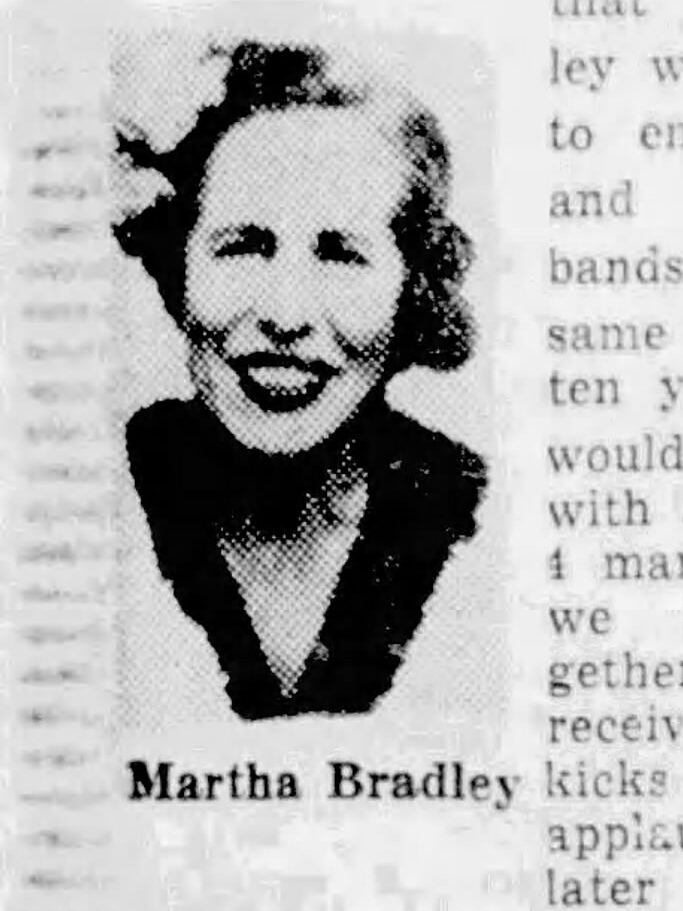
Although many people used the Ballroom to support their communities through fundraisers, speeches, and celebrations, access to the space was shaped by Cleveland’s racial tensions and shifting demographics. The Circle Ballroom would eventually become an important venue for the Black community, but this only occurred after many years of limited and contested access. From infrequent rentals to Black organizations in the late 1930s, to segregated advertising in 1959, and later to police raids that targeted the Black community, the Ballroom became a space where the struggle for inclusion was constantly unfolding. Despite these challenges, it still grew into a site of joy, resistance, and support whose legacy extended far beyond its entertainment.
To understand this story, it is necessary to understand the Cleveland of the early 1930s. The Great Depression had wounded the city. Families struggled, workers lost their jobs, and joy felt out of reach. These conditions especially harmed Cleveland’s Black population: though they made up only seven percent of the city, around thirty percent of the unemployed were African American. Even in hardship, people sought places where rhythm, dancing, and laughter could briefly replace worry. It was in this climate that the Circle Ballroom gained new significance—not yet inclusive, but a place where people found moments of relief and connection.
By 1938, the Ballroom featured musicians and performers of different backgrounds, and by 1939 records from the Call & Post show the NAACP holding an annual dance there. This suggests that Bradley was, at times, willing to rent to Black groups, though access was neither consistent nor widely available. A 1942 Call & Post article notes that the Caterers’ Association had been the first Black organization to hold a dance at Zimmerman’s, but these appearances were isolated moments—not indicators of regular mixed-race gatherings. After 1939, Black use of the Ballroom seems to disappear from the public record until 1959, a gap that highlights the limits of access.
Cleveland’s demographic shifts by the late 1950s—when migration, housing changes, and displacement transformed the Hough and Euclid Avenue areas from predominantly white to majority Black—likely made the Ballroom more open to Black renters and audiences once again. But segregation persisted. In 1959 the Call & Post advertised Wednesday night dances “open to the public,” while white newspapers advertised only Friday–Sunday events, suggesting a deliberate separation of audiences rather than true inclusion.
Still, even limited access carried significance. Black community groups sought spaces where they could gather, organize, and celebrate, and when the Ballroom opened its doors—however inconsistently—it became a place of meaning. Groups such as the Cleveland Business League held functions there, and activist organizations like the Freedom Fighters used the venue as well. Hobo dances for the younger community and contests were also often held. These events did not mean the Ballroom was fully integrated though, but rather they demonstrated how African Americans in Cleveland created safe spaces within unfair structures that often excluded them. Bradley herself sometimes faced pressure to restrict rentals to Black patrons, as one 1946 Call & Post article suggests, showing that inclusion was contested even by the owner.
As the Ballroom became more associated with Black community use in the late 1950s and early 1960s, it also drew unfair scrutiny. Crime-related reporting overshadowed the nightly joy, music, and community work that took place there. Black-centered social venues across Cleveland had long faced such biases; liquor boards and local authorities often viewed them as risky not because of actual crime, but because of racial bias.
This discrimination is clear in a liquor raid that escalated into violence involving Sanford Coleman Bey. A Plain Dealer article presented Bey as assaulting agents, showing him mid-punch and implying aggressive resistance. The Call & Post, however, described a heavy-handed raid in which patrons—many of them Black—were treated like criminals without cause. According to this account, Bey intervened only to speak to his wife and defend other women from mistreatment. For this, he was beaten and arrested. These competing narratives reveal both police misconduct and the racialized media lens through which the Ballroom was viewed.
Even as society often resisted progress, inside this venue, people could be free to dance, to speak, and to exist without shame. In the decade before it closed in 1968, the Circle Ballroom finally embodied the kind of community united by music, joy, and fellowship that Martha Bradley had intended from the start.
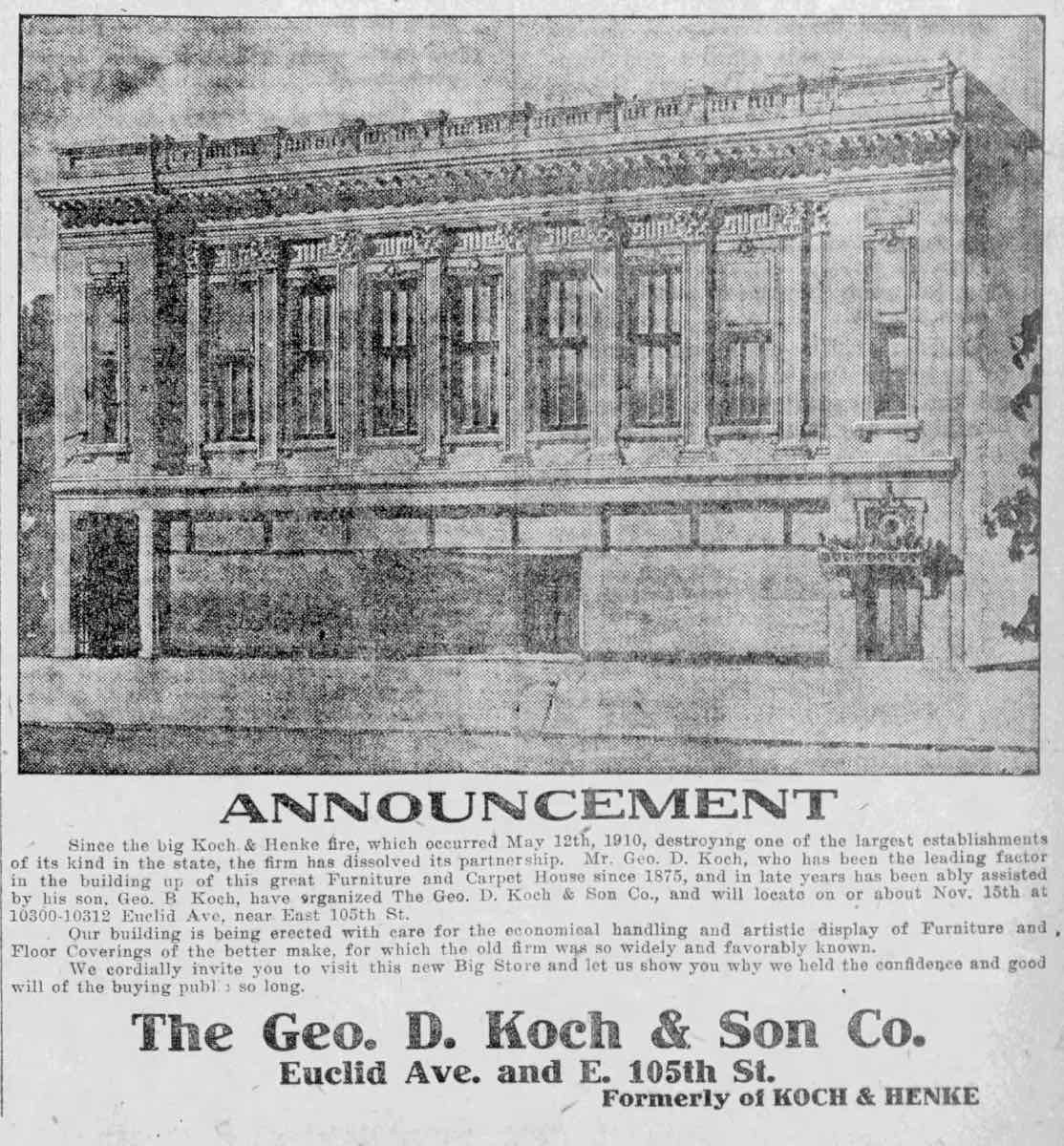
The Circle Ballroom’s prior establishment | Plain Dealer, November 6, 1910 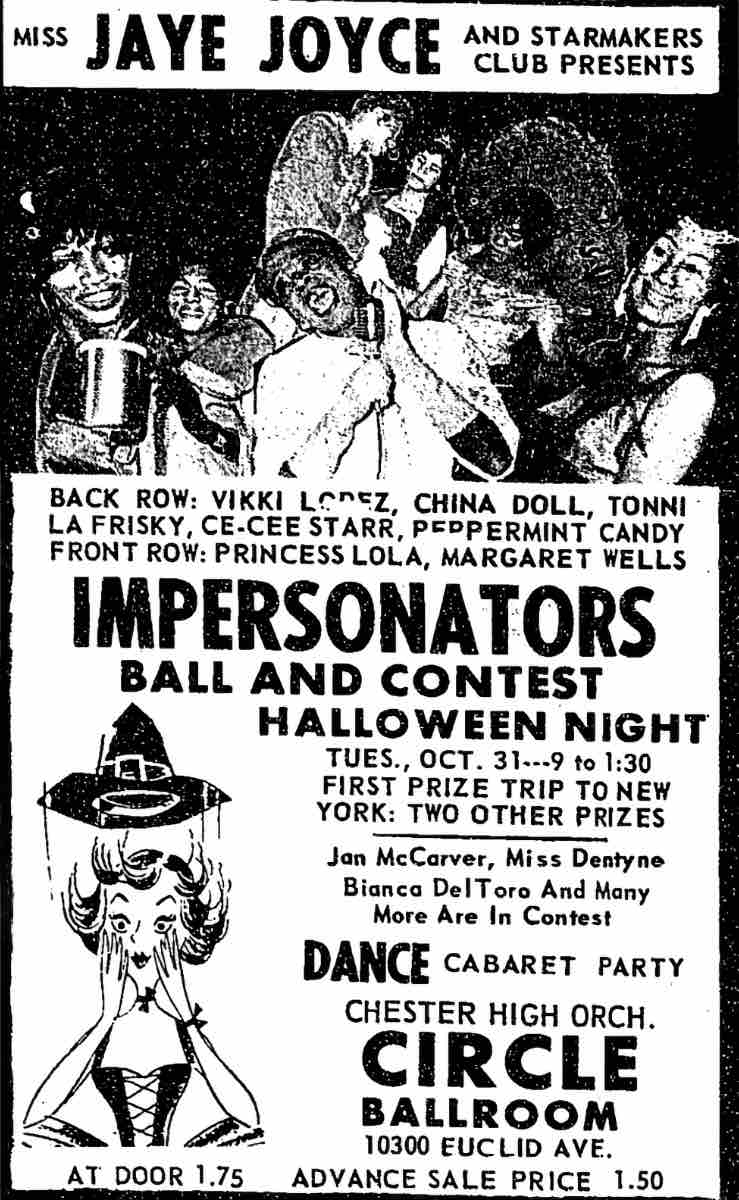
Advertisement for an Impersonator’s Ball held at The Circle Ballroom | Call & Post, October 28, 1961 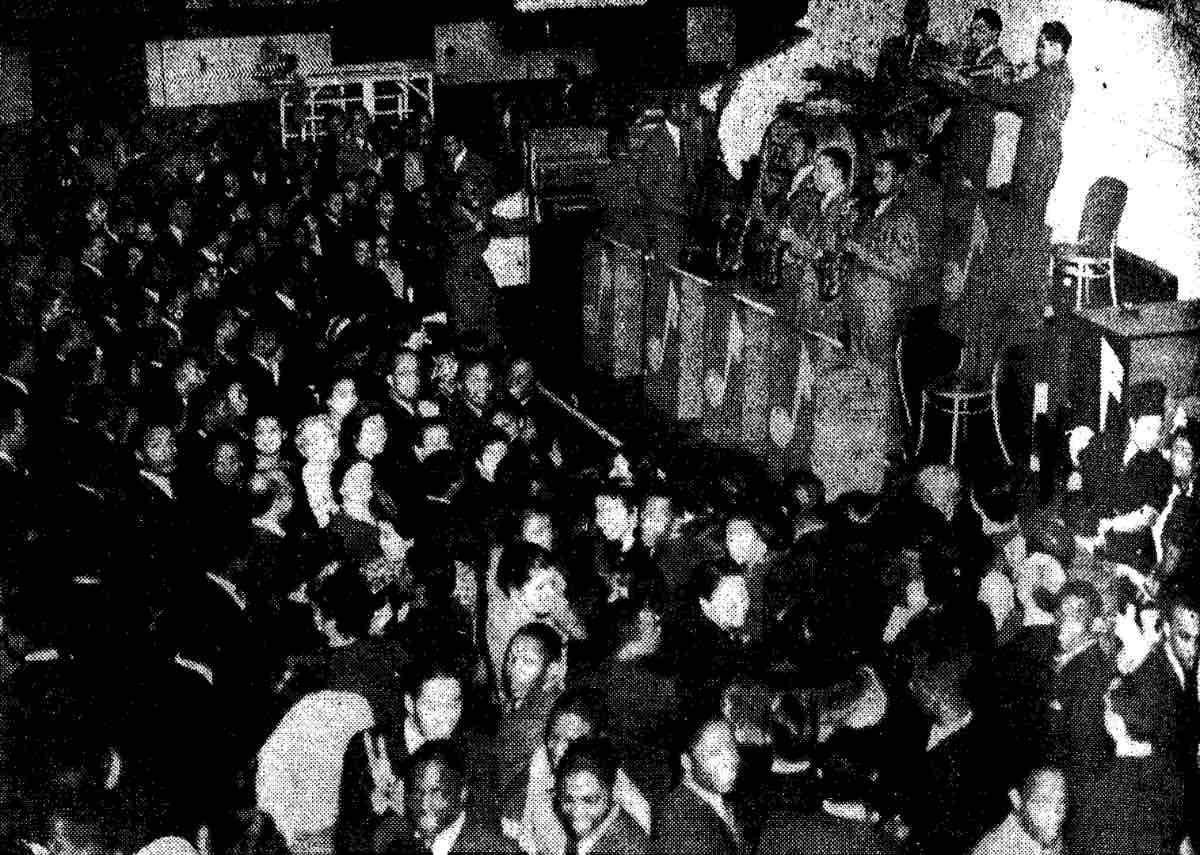
Musicians “Scat Man” perform at The Circle Ballroom NAACP dance to raise funds for “Negro Civil Rights” | Call & Post, February 23, 1939 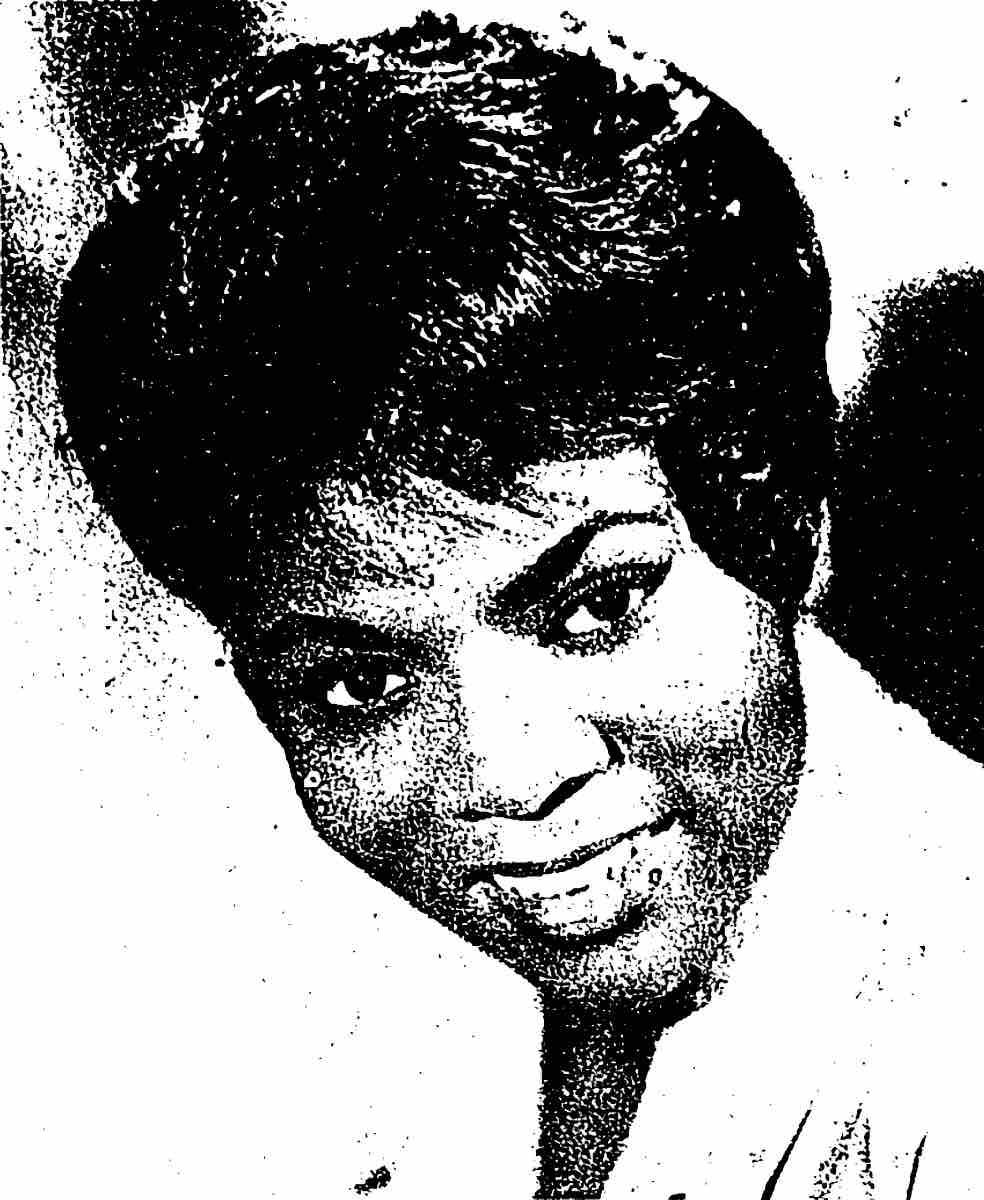
Photograph of Dee Dee Warwick, also the sister of Dionne Warwick, Set to Perform at the Circle Ballroom | Call & Post, January 18, 1964
Resources
- “Unemployment Figures.” Cleveland Call and Post. May 11, 1935.
- “Liquor Raid Fight Is Legal Donnybrook, Too.” Cleveland Plain Dealer. July 4, 1965.
- “Lively Floor Show to Feature NAACP Dance: Lovely Contestants Aid Ticket Sale, Record Crowd Expected.” Cleveland Call and Post. February 9, 1939.
- “Musical NOTES.” Cleveland Call and Post. October 5, 1946.
- “1st Dance at Circle Ballroom Wednesday.” Cleveland Call and Post. October 3, 1959.
- “CBL Hosts Annual Pre-Holiday Party.” Cleveland Call and Post, City edition. December 7, 1963.
- “Say Cops Mishandled Circle Party Arrests.” Cleveland Call and Post, City edition. July 24, 1965
The Circle Ballroom was rented by Jaye Joyce in 1961 to host the LGBTQ event, The Halloween Parade, Jaye Joyce, Dorian Corey, and Tony LaFirsky performed. It was written about in the Call and Post